The wastewater lift station of municipal facilities is outdated. The pumps are nearing the expiration date of their service life span, the controls require modernization, and the access hatch has deteriorated. However, the concrete wet well remains structurally sound.
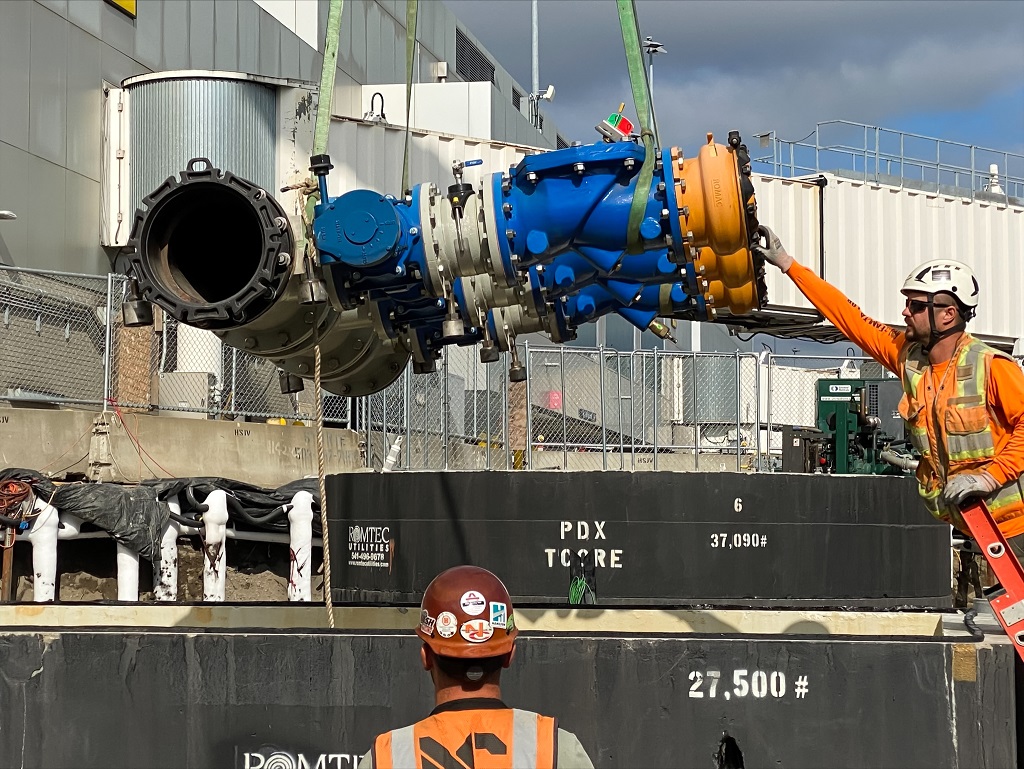
Image credit: romtecutilities.com
Should the entire station be demolished and rebuilt? Not necessarily. It is better to determine if the infrastructure already in place is capable of supporting an advanced system of pumping without compromising capacity in the future in terms of reliability, reliability, or accessibility.
Retrofitting a pump station could be a fantastic method to protect infrastructure and replace parts that have become obsolete.
Begin with the Structure that nobody is Trying to Replace.
Wet wells are usually the most expensive and difficult component to replace, as they are underground and connected to existing pipes and are vital to wastewater collection.
Retaining a concrete construction that is still usable could make it easier to dig and build.
However, damage to the access hatch could complicate the decision. Romtec Utilities says that wet well hatches are typically replaced in retrofits. Instead of gluing a hatch to deteriorated cement replacing the whole top layer might be a better option. This approach can improve access and extend the structure’s usefulness without having to rebuild the entire wet well.
A better pump alters the design
Consider a neighborhood that has experienced significant growth since the installation of a lift station. The pumps that are in place may not be sufficient for the increasing flow of wastewater.
The improvement of a pumping unit could comprise higher horsepower equipment, but it is not possible to do this without taking into consideration the system around it. Pumps with greater horsepower could require adjustments to discharge elbows, piping and pipework as well as electrical controls, valves and other parts.
Engineers should also consider the hydraulic requirements of the system. This includes flow and the total dynamic pressure. If you install a bigger pump without considering these factors the system could cause operational problems rather than resolve the problem. Planning future capacity prior to initial design can make future expansion easy.
Keep Wastewater Moving during Construction
A wastewater pump station retrofit introduces a challenge that ordinary equipment replacement projects may not face: the station may need to remain operational throughout construction.
Even when contractors are busy they continue to receive wastewater. According to the type of project it is possible that temporary bypass pumps will be required to keep operation while the existing equipment is removed, and new equipment is installed.
Romtec Utilities accepted this challenging task in the Federal Law Enforcement Training Center, Brunswick, Georgia.
The project involved the replacement of two outdated wastewater lifting stations while operating the facility. Site-specific engineering as well as packaged systems and bypass pumping techniques made it possible to meet existing station footprints as well as operational requirements. The scenario illustrates why construction sequencing deserves attention before installation begins.
When replacing is the most efficient option
Each station is not able to be restored. A seriously degraded wet well or a structural weakness or significant changes to hydraulic requirements might make a the replacement of a sewer lift station more suitable than altering the existing installation.
In making a final decision, it is crucial to take into consideration the structural condition of the building, its compatibility with equipment, access to construction, service continuity as well as long-term requirements. Romtec Utilities starts retrofitting and replacing projects by identifying the components that are to be kept and those that must be replaced.
The company develops engineering solutions specific to the location, initial plans and budget estimates. Prefabricated components are also beneficial to facilitate installation and reduce certain requirements on site.
The Project Isn’t Complete When the Pumps Are Beginning
Modern lift stations have to be operated as an integrated system. Before returning a lift-station to normal service, startup tests, commissioning as well as verification of the equipment are essential to verify that the pumps, controls and other equipment are operating according to design.
Training and manuals for operators are equally vital. Maintenance workers must be aware of the latest equipment, operating procedures, and documentation before taking responsibility for the station.
A successful retrofit helps preserve the value of infrastructure as well as addressing the weaknesses that led to modernization being necessary.
This means that municipalities and owners of facilities need to look beyond the immediate repairs. The strongest project is one that integrates the new equipment with existing structures, ensures vital service throughout construction and also prepares the pumping system to last for years of continual operation.